

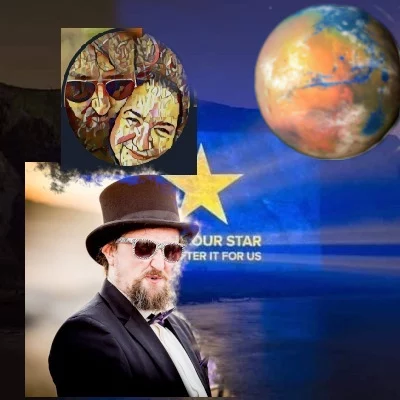
A few weeks ago, my musician friend Sknob released a song and video, “Do something”. It reminded me about sharing here how the manual and artistic activities I am doing not-for-a-living deeply improve my research process, my mental health, and how they ground me in reality too — which is, let’s be honest, quite essential in the times we are living in for a person doing most of their work with their brain.
Sknob’s little ukulele ode to human creation is (partly only, I guess, but still) inspired by the (not-so) great AI “replacement”, and I’ll come to that at the end of this post. But for the time being and for a change, let’s take a break from this nerve-racking subject and just talk about the real, old-school world. It’s a very personal post, and I’m going to talk about my mental health, but also about my research transition, which is as a matter of fact also deeply related to my mental health. So not entirely off-topic on this blog either.
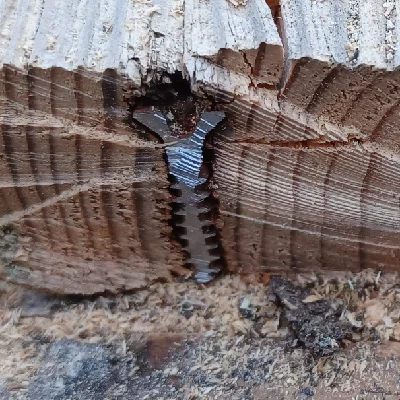
This summer, I bought (or rather, mortgaged) a small house in the Pyrénées to be able to live closer to my new work place during week days. My transition to a new lab, as refreshing as it is professionally, actually came at the expense of having to live away from my family 3 days a week for the next 5 years at least, something I haven’t talked about here but was not an easy decision for us ; maybe the subject for another chronicle. It is an incredible place immersed in a very well-preserved mountain valley with luxuriant nature all around, though, which is incredibly soothing to me (kid and significant other are going to be fine too, this is a common decision of course). The house is nice too, but it needed some significant refurbishments in different technical areas, and pretty quickly, to be able to live in comfortable conditions when I start my new direction job in January. So I used the quiet August and September period to DIY these renovations all by myself (having good experience from doing work in our family house and at my parent’s place). I am almost done with them now, and although I have never been so tired and traumatized physically (carpal tunnel anyone ?), the result is deeply gratifying. Not because it is perfect, far from that, but because I rose up to my own challenge of doing so much in 2.5 months (besides my professional commitments, including preparing my landing as head of a CNRS lab). And because that work is mine, was done with my own hands, and that nobody, even a very well-paid jack-of-all-trades worker could have done it on the schedule required to have a fully-operational house by this autumn. In other words, I did something a bit unique, that is going to live in my memory for a long time, and that also required quite a bit of creativity notably because my budget was rather tight for this (I recycled quite a lot of raw materials already present and bought much of the rest second hand). Was it intellectual / sophisticated, like my academic research work ? Not the least, yet it gives me much more satisfaction than a published paper (which would take about the same time for me to write from scratch ).
There’s another important side benefit of this period. I now have enough of this for the time being, and feel ready and motivated to start in my new job and get back into deeply intellectual work. I think the last time I was so eager to start anew was when I started my postdoc in the UK 21 years ago. And not just because it’s a new job in a new place, but because my brain has clearly been severed for a few months of something that’s actually essential to it : thinking abstractly. And it’s now yelling back at me, “when the f* are we going back in business” ? I discovered this evidence while burning my hands with hybrid mortar : taking a long break from work, if you can do it, is actually a very good investment for your future career.
Now, a second story of doing something not-work that’s actually useful in my work, playing music. We have this strange way in France of bringing up young researchers (and other “elite” professions”, say professional tennis players or orchestra musicians) by making them become little performing monkeys while discarding their thought maturity and emotional well-being entirely. Our elite education system is very “good” at channeling us to high-level while inhibiting a lot of our emotional lifes and critical thought process until we reach that level. For many of us (tennis players included), it implies having an existential crisis of epic proportions later when we reach professional maturity, and disappointing on the international stage after all this investment. In my case, I suppressed my desire to play music intensively for 15 years, only to realize at 35 that something was deeply amiss. I then started playing upright bass 3h/day for 3 years in a row, somewhat of a reverse excess. Benefit #1, of course : a more balanced personal/pro life (I was working night and day before that, apart from trying clumsily to be a decent companion and father). Benefit #2, making musical progress. Benefit #3 was much less expected but is equally, if not the most interesting in the long term. When I tried to learn music as an adult, outside of music conservatory / school and of the usual track to become a functional gig musician, for the first time in my life I was confronted with having to think about how to learn. In the French school system, you are mostly fed your education program, cursus, assignments, tutoring etc. It’s all pre-digested for you and you almost never have to think about what made you learn so much during all these hard days at school.
And, wow, how much did I learn exploring this rabbit hole, as a deeply imbalanced adult distorted by a French education. You know, stupid things like it’s all about the process, not the destination. Organizing your (practice) time. Having a routine (in research, I mainly vibe-organized my work on the fly for 20 years). Creating habits. Having a work log and noting your incremental progress (and frustrations). Breaking things down. Slowing things down to better engrain the material. Taking pauses. Repetition, coming back to the same material again and again. Enjoying the moment and doing simple things, such as the joy of savouring a small result coming from a very simple action (like, trying to have a good sound playing a single note). Being indulgent with oneself on bad days. Building your own unique personality through the material you work on and absorb. I was supposed to be part of the elite, and had effing never heard anything like that during my whole cursus and formative years (also my parents were not of the creative/artsy type due to family history, so not much inheritance effect). Je vous demande pardon, le French système, how the fuck did you dare hiding all of that from me during all these years ? Just because i was learning science didn’t mean it had to be dull, non-reflexive, and disconnected from creative spirits ! A text I read on this subject, and that was very influential for me, musicwise first, is by Hein van De Geyn, an acclaimed bass player and educator who notably played with Chet Baker. Hein wrote a massive (and very well-known within upright bass jazz players) “Comprehensive bass method”. It starts with 4 pages of introduction on what it means to become a mature musician, to practice an instrument, how we should envision it, the long game etc. It’s a very zen and enriching text packed with wisdom, which I now like to send to everyone getting started, in music or any other creative avenue really. And I now also send it to everyone having a burnout at work (that is, many friends and colleagues) ! Within ten years of following this practice regimen (not even 3h a day for that whole time), I did not become Ron Carter or Jaco Pastorius, but was evenutally able to perform on a few big stages with some of the best jazz musicians of the Toulouse area, starting from a very modest level. I even got to play a tune once at a jam with Ali Jackson, Wynton Marsalis’s Lincoln Orchestra drummer, and French wunderkind alto sax player Baptiste Herbin, something I would not have thought possible in my wildest dreams just a few years before. I am unfortunately playing much less music these days, but learned a lot during that period, including rich human and emotional experiences.
If this story of learning how to learn (and learning about life in general) sound very naïve to you, that’s because it is, and I have no problem admitting that. Yet I found that it is very common among researchers to have never heard of anything like this whatsoever during their entire life, and that our lack of time-organization (especially among CNRS people who do not teach a lot) is actually very much tipping us into depression spirals . Learning to practice music efficiently as an adult taught me how to better organize my day job and to gain perspective into its daily ups and downs. It pays hugely now, also because struggling to become a better musician, noting my practice everyday and noticing slow incremental progress after slow incremental progress, gave me a new perspective on my own struggles in research, and on the pace at which a project, or broader intended life aspirations unfold. I find it much easier to have the long game in mind now than just ten years ago, and by far this is not only just because I’m older. Deliberate practice (that’s the name given to practicing with intent and hindsight) of my hobby definitely made me a better scientist, and a more mature adult. And not only did it not make me less productive during that period, it was actually critical to survive it professionally, and tremendously helped become the person I am now, the same person trying hard to change its professional course without quitting.
Finally, to come back to Sknob’s allusions to AI and doom. No machine could have done what I have DIYed in this house this summer, and no machine could have helped me get the human, mind, body and broader life experience I got from ten years of trying to become a musician having fun on a jazz stage. It’s a human thing 100%, and indeed it is all about the process of living personally through these experiences. The house DIY also gives me a pleasant feeling of being irreplaceable which, although I do not consider what I am doing in research at risk at all currently, increasingly matters a lot, these days, in academia.
So my two cents for colleagues who are sad about the latest developments on genAI consumption in academia, or more broadly are having a rough time in their career, are struggling with job-related mental health issues, or are in a doom loop. Follow Sknob’s advice and spend as much time as you can Doing Something, with your hands, body, emotions, pen, music instrument, camera, whatever is far from your intellectual day job and the issues that grind you on a daily basis. It grounds you in reality, does wonders for your mental health, and teaches you invaluable lessons about who you are and aspire to be, as well as about what your life is missing. It makes you a more fulfilled human, and more appreciative of the wonders this world still has to offer.










Leave a Reply